

Tomas Bata (1876–1932): 150 years since the birth of a visionary who built a global empire
7. April 2026“Our enterprise is … profitable. Yet its technical, commercial and social structures have already reached such proportions that profit alone has ceased to be its sole and ultimate aim… We therefore seek to enhance and secure the prosperity of the region in which we operate – the land from which we draw our strength and the state that forms the foundation of our business.”
These words were spoken in 1931 Tomáš Bata (1876–1932), who transcended his modest background in Zlín to become a global entrepreneur. By 1932, through his companies, retail stores and factories, he was operating in 56 countries and exporting products to every inhabited continent. He was a global businessman that the international press referred to as the “King of Shoes” (“Schuhkönig,” “schoenenkoning,” “roi de la chaussure,” “The Shoe King”). He was often described as “Czechoslovakia’s Ford.” Widely respected as an entrepreneur, he was praised by politicians, economists, artists and intellectuals. Today, several institutions bear his name, including the Tomas Bata University in Zlín.
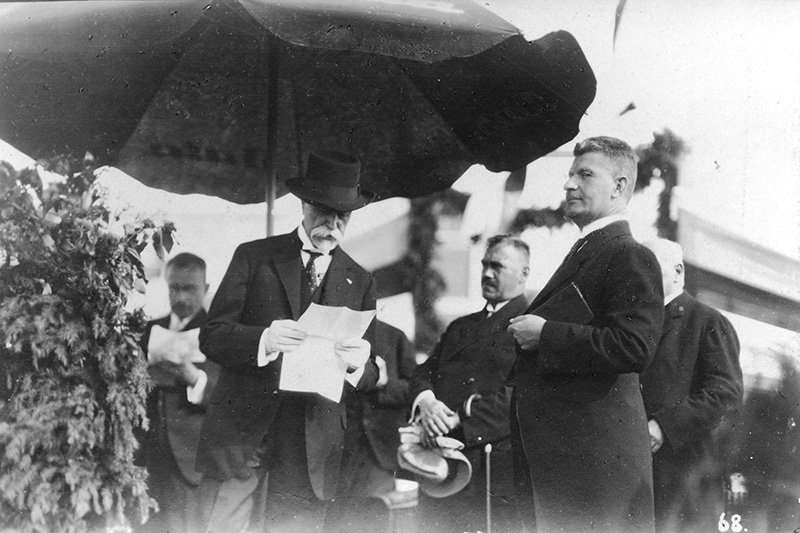
Tomas Bata began in modest circumstances alongside his siblings, but through diligence, innovation and a strong emphasis on efficiency, he was able to grow the company rapidly. He introduced modern production methods inspired, for example, by assembly-line principles, significantly reducing costs and making quality footwear accessible to a broad public. His business philosophy, however, extended beyond profit alone – he placed great importance on social responsibility towards his employees.
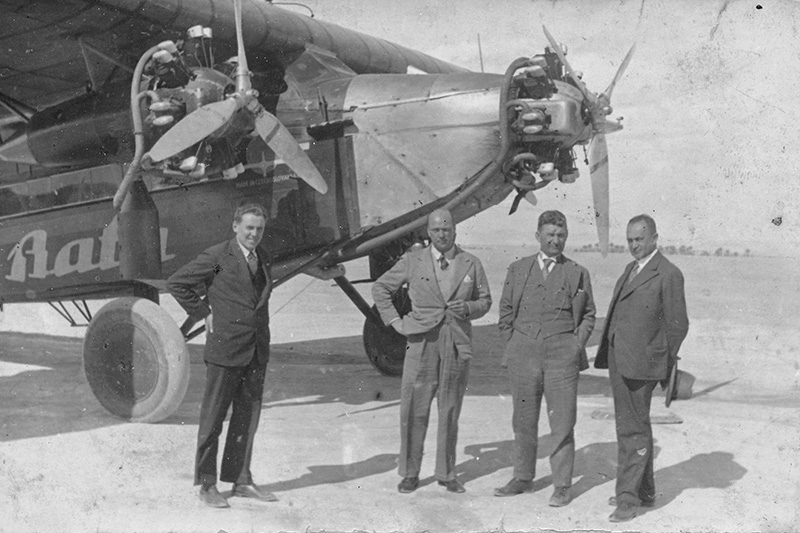
An important chapter of his life was the transformation of Zlín. After being elected mayor in 1923, he systematically set out to create a modern city. New factory buildings were constructed in a unified functionalist style, alongside the quintessential red brick houses for employees, schools, a hospital, cultural facilities and sports facilities. Zlín became a symbol of modernism and, at a time of social unrest, also of a successful social utopia, where commerce, housing and education were interconnected.
Tomas Bata tragically died on 12 July 1932, in a plane crash in Otrokovice, after departing the firm’s airport en route to opening a new factory in Switzerland. He was 56 years old. The leadership of the company then transferred to a three-member directorate – Jan Antonín Bata, Dominik Čipera and Hugo Vavrečka – who continued to follow the firmly established principles laid down by Tomas.
The work and philosophy of Tomáš Baťa are preserved and further developed by the Thomas Bata Foundation, which supports education, culture, and community initiatives rooted in his legacy.
Discover more at the Thomas Bata Foundation website.